Over a century ago, in the region now known as Toyama Prefecture, a farmer unearthed an unusual stone while digging for potatoes. Initially, even experts from the Osaka mint were baffled by its identity, and for several years, it served as a tsukemono ishi, a large stone used in the pickling process. However, this enigmatic mineral was destined for a more illustrious fate.
In 1895, geologists from the Ministry of Agriculture and Commerce identified the stone as a meteorite, which they named the Shirahagi Meteorite. It was acquired by Enomoto Takeaki, a samurai pivotal in founding Japan’s first modern navy and who held various ministerial roles, including Minister of Communications and Education.
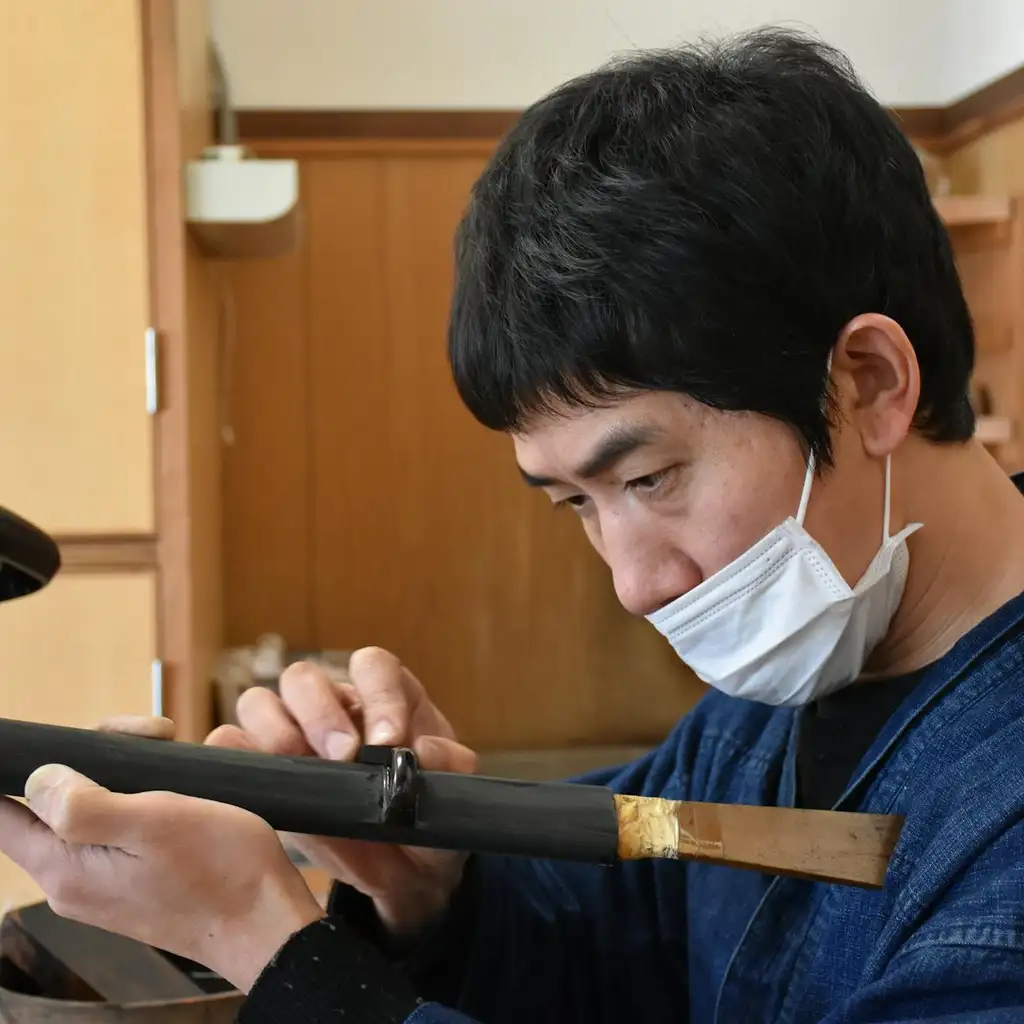
Rather than using the meteorite for pickles, Enomoto commissioned swordsmith Okayoshi Kunimune to forge five blades from it: two long swords and three tanto, or short swords. One of these tanto is preserved at the Toyama Science Museum in Toyama City, where visitors can marvel at its celestial craftsmanship.
The Legacy of the Ryuseito Swords
These five meteorite blades are collectively known as the Ryuseito, or “comet swords.” The superior quality katana was presented to the crown prince, who later became Emperor Taisho. The remaining swords were passed down to Enomoto’s descendants. The second katana is now owned by Tokyo University of Agriculture. As for the three tanto, one is housed at Ryugu Shrine in Hokkaido, another’s whereabouts remain unknown, and the third is part of the Toyama Science Museum’s collection.
The tanto is not on permanent display, but it can be viewed by visitors until October 14. During a visit, Mr. Hayashi, the museum’s astronomy curator, shared insights into what makes the blade special. The Ryuseito’s metal origin is unique, with meteoric iron containing about 10 percent nickel, higher than terrestrial iron, and less carbon, making it difficult to work with. The swords are an alloy of 70 percent meteoric iron and 30 percent tamahagane, the traditional iron sand-rich metal used for katana.
Craftsmanship and Mystique
Enomoto’s journals claim the Ryuseito “cut well,” though Hayashi is skeptical. Despite their tamahagane content, the Ryuseito have less carbon than typical swords, potentially making them less effective in combat. However, the meteoric iron gives the swords uniquely beautiful hamon, or tempering marks, with stark black waves flowing over the metal.
Hayashi also dispelled a rumor about the Ryuseito. Contrary to claims that they lack the smith’s signature, the kanji for “Kunimune” is clearly engraved on the sword, along with a solid-gold inlay reading “seitetsu,” or “star iron.”
While the Ryuseito may not excel in duels, they are undeniably captivating to behold. A visit to the Toyama Science Museum is well worth it for those in the area. As for the fifth Ryuseito, hope remains that it will one day be found, just as a farmer once discovered a meteorite while searching for potatoes.