The arming sword, often synonymous with the image of a knightly weapon, stands as a timeless emblem of chivalry and valor. While some may envision a katana or scimitar, the arming sword remains a classic representation of medieval warfare, making it an ideal subject for examining the anatomy of swords.
Originating from simpler weapons like the Roman gladius and spatha, the arming sword is crafted to be lightweight with dual sharp edges, primarily intended for slashing but equally effective for thrusting. Ewart Oakeshott, a distinguished sword historian, categorized these swords, underscoring their historical significance.
Dissecting the Anatomy of an Arming Sword
The Blade
Typically measuring around 30 inches, the blade of an arming sword features a tapered point and sharpened edges. A central ridge, known as a fuller, runs along the blade, often misidentified as a “blood groove.” Constructed from carbon steel, these blades were tempered through heating and quenching, sometimes using unconventional methods like urine. A full tang construction was standard, ensuring the sword’s durability.
The Fuller
Contrary to popular belief, the fuller was not designed for blood drainage but rather to provide a spine for the blade, enhancing its strength while reducing weight.
Forte and Foible
The forte, the strongest section of the blade, is located near the hilt, while the foible, the weakest part, is near the tip. These sections are crucial for the sword’s balance and effectiveness.
Edge and Chappe
Both edges of the arming sword were sharpened, though knights typically avoided parrying with the edge to prevent damage. The chappe, a leather or metal piece extending from the hilt, helped protect the blade from environmental elements, particularly rain.
The Hilt
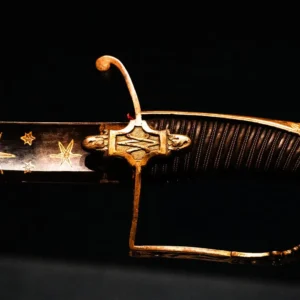
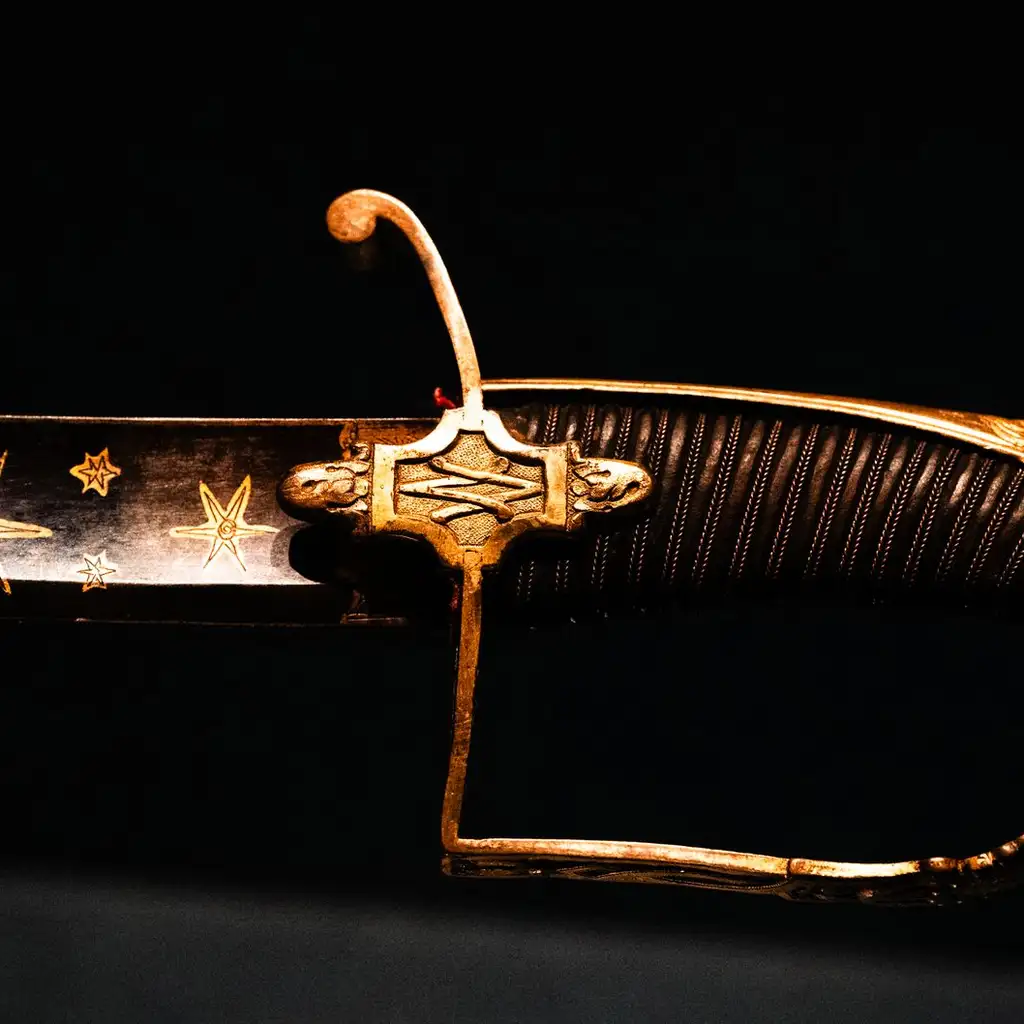
The hilt consists of the guard, grip, and pommel, essential for control and balance. The cross-guards protect the wielder’s hand from opposing blades. The grip, often wrapped in leather or wire, ensures a secure hold, while the pommel acts as a counterweight and can be used offensively.
The Tang
The tang is the portion of the blade that extends into the grip, providing structural integrity. Full tangs are preferred for their strength, while rat-tail tangs, though less robust, are still used in some modern reproductions.
This detailed examination of the arming sword’s anatomy highlights the intricate design and historical importance of this iconic weapon. While some aspects remain unexplored, future discussions will delve into other sword types, such as rapiers and cut-and-thrust swords, to further satisfy the curiosity of sword enthusiasts.