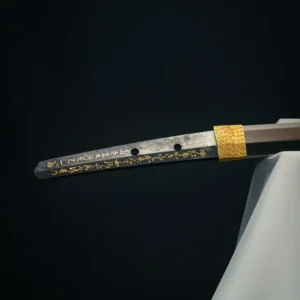
In the world of traditional Japanese sword-making, dedication and mastery are paramount. Shimpei Kawachi, a 16th-generation sword artisan, knows this all too well. His father spent four decades perfecting the “utsuri” technique, a method that creates a unique shadow or reflection pattern on the blade. This intricate process, once thought lost after 1600, has been revived by Kawachi’s family, making them the sole practitioners of this ancient art in Japan.
The Kawachi family is committed to preserving and promoting this craft through exhibitions and education. Shimpei, alongside his brothers, continues the legacy, each contributing to the family business in their own way. While his siblings focus on crafting swords, Shimpei has turned his attention to business development with his company, “Studio Shikumi,” aiming to safeguard and share Japan’s cultural heritage globally.
Before venturing into entrepreneurship, Shimpei worked at the Tokyo National Museum, where he frequently encountered individuals seeking to preserve their cultural treasures. These experiences inspired him to explore the niche market of managing and preserving cultural assets, particularly swords, which have garnered interest from international collectors, especially in places like Hong Kong.
Despite their historical role as weapons, Shimpei views swords as art pieces, rich with cultural significance. Traditionally, katanas were revered as both weapons and sacred objects, believed to protect the spirit. They remain a popular gift symbolizing protection, even today.
In traditional Japanese weddings, a bride might carry a small knife hidden in her kimono layers, a custom rooted in history. While this practice is no longer followed, it highlights the deep cultural ties swords have in Japan. Today, these weapons are often displayed during New Year celebrations, admired for their craftsmanship.
The Art and Cost of Craftsmanship
Creating a katana is a labor-intensive process, with an “utsuri” sword crafted by Shimpei’s father, Kunihira Kawachi, costing several million yen. The production involves a month of meticulous work, including repetitive steel reforging and polishing to achieve the blade’s distinctive wave-like pattern. This dedication to excellence and beauty is what makes each sword a masterpiece.
Currently, Japan has about 200 sword artisans, but only a handful can sustain themselves solely through this craft. Post-World War II, many artisans had to adapt, turning to create “jizai okimono,” movable steel animal figures that serve practical purposes like paperweights or incense holders.
Innovation Meets Tradition
Japanese crafts are evolving, blending tradition with modern technology. Studio Shikumi exemplifies this with its collaboration with a 3D printer company. This partnership has produced a collection featuring handmade swords with acrylic scabbards, crafted using 3D printing technology. It took Shimpei six months to program the printer, paving the way for serial production.
Another innovative project is the “urushi” series, which merges Japanese lacquer techniques with 3D printing. This collection includes drink vessels, mirrors, bowls, and vases, each showcasing a unique design that combines traditional aesthetics with modern technology. While the 3D printer handles the basics, artisans complete the finishing touches, ensuring each piece retains its handcrafted essence.
When asked why one should invest in these objects, Shimpei emphasizes the enrichment they bring to life. He argues that while the taste of sake might not change with the vessel, the experience and appreciation of craftsmanship do. It’s about the “kimochi” – the feeling and connection to the artistry.